


 Contact us








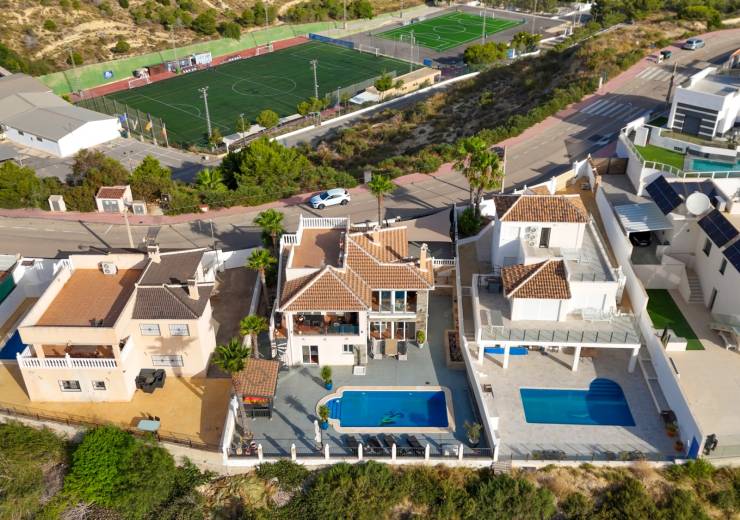
Costa Blanca Property Prices in 2026: Why €200,000 Doesn't Buy What It Used To
Expectations Have Changed. The Market Has Too.
Spend just a few minutes browsing property forums, watching reruns of A Place in the Sun or speaking with friends who purchased a home in Spain several years ago, and it quickly becomes apparent why so many people begin their Costa Blanca property search with expectations that no longer reflect today's market. One of the most common assumptions is that a budget of around €200,000 should comfortably secure a detached villa with three bedrooms, two bathrooms, a private swimming pool and walking distance to restaurants, shops and local amenities.
It is an understandable perception. Many television programmes that continue to air today were filmed years before they reached our screens, showcasing a property market that has since evolved considerably. Others rely on stories from friends or relatives who bought in Spain ten or fifteen years ago, often remembering what they paid rather than what those same properties would achieve in today's market. The result is that many prospective purchasers arrive with expectations shaped by historic prices rather than current market conditions.
At Right Priced Real Estate, one of the most frequent conversations we have with clients begins with budget. More often than not, the budget itself is perfectly realistic. What has changed is the expectation of what that budget should achieve. The Costa Blanca has not suddenly become expensive, nor have prices increased without justification. Like every established property market, it has responded to changing economic conditions, rising construction costs and sustained demand from people who see this part of Spain as somewhere to live, not simply somewhere to holiday.
Anyone who has purchased property in the United Kingdom or elsewhere in Europe over the past decade will recognise the same trend. Inflation has affected virtually every aspect of daily life, from groceries and fuel to labour, transport and building materials. Residential property has followed exactly the same economic cycle. The difference on the Costa Blanca is that inflation explains only part of the story. Demand has changed just as dramatically, fundamentally reshaping the market over the past several years.
Costa Blanca South has matured into one of Europe's most desirable destinations for retirement, second homes and permanent relocation. Improved infrastructure, year-round flight connections, excellent healthcare, an established international community and an enviable Mediterranean lifestyle continue to attract purchasers from across Europe. This is no longer a seasonal market driven solely by holidaymakers. Increasingly, buyers are relocating permanently, spending several months each year in Spain or working remotely while enjoying a significantly improved quality of life.
The figures support this transformation. Alicante Province consistently records the highest proportion of foreign property purchases anywhere in Spain, with overseas buyers accounting for more than 43% of all residential transactions. Demand extends well beyond the traditional British market, with purchasers from Belgium, the Netherlands, Germany, France and Scandinavia continuing to view the Costa Blanca as offering exceptional value when compared with many other parts of Europe. This diversity has created a resilient international market that is not dependent upon the economic fortunes of any single country.
That resilience is often overlooked. Many buyers assume that if activity slows in one country, property prices across the Costa Blanca will inevitably follow. The reality is considerably more balanced. While exchange rates and economic conditions undoubtedly influence individual nationalities, the region benefits from demand originating across multiple European markets, each responding to different financial circumstances. When one market becomes quieter, another frequently remains active, helping to maintain confidence and stability.
Another misconception worth addressing is the belief that rising prices are simply the result of optimistic asking prices. The reality is far more straightforward. Well-presented homes in desirable locations continue to attract strong interest because demand consistently exceeds the supply of quality property. Equally, properties that are overpriced, poorly presented or incorrectly positioned within the market can still remain unsold for many months. Rising values do not mean every property represents good value. Accurate pricing remains just as important today as it has always been.
This distinction between price and value is becoming increasingly important. Two detached villas may share an identical asking price, yet represent completely different opportunities depending on their location, orientation, construction quality and long-term appeal. Understanding those differences is often the key to making a successful purchase, and it explains why experienced local advice continues to hold significant value despite the growth of online property portals.
The Costa Blanca property market has undoubtedly changed over the past decade, although the reasons extend far beyond simple price inflation. Lifestyle has become one of the region's strongest economic drivers, supported by limited supply, continued international demand and an infrastructure that continues to improve year after year. Understanding these factors is essential for anyone considering buying property in Spain today, not because yesterday's prices no longer exist, but because today's market offers a very different proposition from the one many people still remember.
The question, therefore, is not whether property prices have increased. The more important question is why they have increased, whether those changes are supported by genuine market fundamentals and, ultimately, what buyers should realistically expect from today's Costa Blanca property market.
Why Prices Have Changed: The Economics Behind the Costa Blanca Market
Whilst inflation has undoubtedly influenced residential property values across Europe, it would be misleading to suggest it is the sole reason prices have risen on the Costa Blanca. The market has been shaped by a combination of economic, demographic and structural factors that have fundamentally altered both supply and demand. Understanding those forces is essential, not only to explain today's pricing, but also to appreciate why comparisons with the market of five or ten years ago are increasingly difficult to make.
Across Spain, residential property has experienced sustained growth over recent years, reflecting a broader European trend rather than an isolated regional phenomenon. Official figures from Spain's National Statistics Institute show that property values in the Valencian Community increased by 14.3% during the year to the first quarter of 2026, outperforming the national average. Resale properties recorded particularly strong growth, underlining the continued demand for established homes in mature locations where supply remains limited. These figures support what buyers, sellers and estate agents have witnessed first hand: demand has consistently outpaced the availability of well-located residential property.
Construction costs have played an equally significant role. Building a home today is considerably more expensive than it was only a few years ago. Rising material prices, higher labour costs, increased energy prices and more stringent building regulations have all contributed to higher development costs, while the availability of suitable land in established residential areas has become increasingly constrained. The consequence is straightforward. The replacement cost of a detached villa built today is often substantially higher than the amount its original owner paid to purchase it. As new-build prices increase, the resale market inevitably follows, particularly where existing homes occupy locations that simply cannot be replicated.
Supply has become one of the defining characteristics of the Costa Blanca market. Unlike expanding suburban developments in other parts of Europe, many of the region's most desirable communities have matured over several decades. Ciudad Quesada, Benijófar, Guardamar del Segura, La Finca Golf and neighbouring residential areas are well established, with finite development opportunities and infrastructure that already supports permanent living. New properties continue to be built, although they cannot be delivered quickly enough to satisfy sustained international demand, particularly in locations where buyers want to be within easy reach of beaches, golf courses, restaurants and everyday amenities.
Demand, meanwhile, has become increasingly diverse. British purchasers continue to play an important role, although they now form part of a much broader international market. Buyers from Belgium, the Netherlands, Germany, France and Scandinavia continue to invest heavily throughout Alicante Province, attracted by the region's climate, accessibility and quality of life. According to the College of Property Registrars, foreign purchasers account for more than 43% of residential transactions in Alicante, the highest proportion of any province in Spain. That level of international demand provides the market with resilience that many buyers underestimate, particularly during periods when one national economy experiences temporary uncertainty.
Exchange rates also influence purchasing power in ways that are often overlooked. British buyers, in particular, tend to remember the price of a property in euros without considering how the value of sterling has changed over time. A movement of only a few cents against the euro can alter the overall cost of a purchase by several thousand pounds, particularly at higher price points. Comparing today's market with one that existed several years ago therefore involves two variables rather than one: property values and currency movements. Both have shifted significantly.
Whenever property prices experience sustained growth, comparisons with the period leading up to the 2008 financial crisis inevitably follow. Whilst understandable, those comparisons overlook one important difference. Today's market is built on considerably stronger financial foundations.
Mortgage lending in Spain bears little resemblance to the practices seen before the global financial crisis. Financial institutions now apply significantly more rigorous affordability assessments, requiring detailed evidence of income, financial commitments and repayment capacity before approving finance. Lending ratios are more conservative, deposits are generally higher and speculative borrowing is far less common than it was two decades ago. These changes have created a market supported by purchasers with stronger financial profiles rather than excessive leverage.
The same trend is reflected in household debt. Banco de España reported that Spanish household debt fell to 42.8% of gross domestic product during 2025, its lowest level for more than twenty-five years. Whilst no housing market is immune from periods of adjustment, today's conditions differ fundamentally from those that preceded the financial crisis. Price growth is being supported by constrained supply, genuine demand and more disciplined lending rather than unsustainable borrowing.
That does not suggest every property represents good value. Markets continue to reward realistic pricing and quality presentation, while homes entering the market at unrealistic figures frequently remain unsold until expectations adjust. Rising prices should never be confused with guaranteed returns, nor should buyers assume that every property will appreciate at the same rate. Local knowledge, careful valuation and an understanding of individual locations remain just as important as they have always been.
Perhaps the most significant difference between today's market and that of a decade ago is the motivation of those purchasing property. The Costa Blanca is no longer viewed simply as a destination for annual holidays. Increasingly, people are relocating permanently, spending extended periods in Spain or investing in a lifestyle that combines year-round sunshine, excellent infrastructure and a pace of life that many Northern Europeans find increasingly attractive. That shift has transformed the market from one driven primarily by aspiration into one supported by genuine long-term demand.
Understanding these economic fundamentals is only part of the picture, however. Property values are determined by far more than national statistics or international demand. The greatest differences are often found at street level, where two homes with remarkably similar specifications can vary significantly in price for reasons that have little to do with the buildings themselves. Location, construction quality and long-term desirability have become the true measures of value, and it is these characteristics that buyers should evaluate before comparing asking prices.
Price Isn't Everything: Understanding Value on the Costa Blanca
One of the most common mistakes prospective purchasers make is comparing properties solely by asking price. On the surface, it seems perfectly logical. Two detached villas marketed at €350,000 should, in theory, offer broadly the same proposition. In practice, they can represent entirely different opportunities, with differences in long-term value that far outweigh the similarities shown in an online listing.
Location remains the single greatest influence on residential property values across the Costa Blanca. Two homes may offer identical accommodation, similar plot sizes and comparable specifications, yet differ in price by tens of thousands of euros simply because of where they are situated. A villa within walking distance of restaurants, supermarkets and everyday amenities in Ciudad Quesada will almost always command a premium over a comparable property requiring a fifteen-minute drive. Likewise, homes close to the beaches of Guardamar del Segura, overlooking La Marquesa Golf or positioned within established residential communities consistently attract stronger demand than those in less mature locations.
This is not simply a matter of prestige. Buyers are investing in convenience, accessibility and lifestyle, all of which contribute to long-term desirability. A property that allows its owners to walk to a local café, enjoy evening meals without relying on a car or access healthcare and essential services within minutes offers a level of convenience that remains attractive long after kitchens have been modernised or gardens redesigned. These are qualities that continue to influence resale demand, making location one of the strongest indicators of long-term value.
Condition is another area where perception and reality often differ. Modern interiors, contemporary kitchens and professionally staged photography naturally create an excellent first impression, particularly on online property portals where buyers frequently make decisions within seconds. Whilst presentation undoubtedly matters, cosmetic improvements should never be confused with the underlying quality of the property itself.
Some of the best value on the Costa Blanca can still be found in older, well-constructed homes that have been maintained rather than extensively modernised. Many villas built twenty or thirty years ago benefit from larger plots, generous room proportions and mature gardens that would be both difficult and expensive to recreate today. Updating a kitchen or bathroom is a relatively straightforward project. Replacing a superior location, increasing a plot size or improving a property's orientation is, of course, impossible.
At Right Priced Real Estate, we often encourage purchasers to look beyond decoration and focus on the characteristics that genuinely influence long-term value. A structurally sound villa requiring cosmetic updating can represent a considerably stronger investment than a recently renovated property occupying an inferior position. Buyers naturally notice new tiles, modern kitchens and fresh paintwork during a viewing, yet the factors that usually determine future resale value are far less obvious. Orientation, privacy, plot size, surrounding development and proximity to amenities are often far more significant than the colour of the kitchen units.
This is particularly relevant when considering different budget levels. A budget of around €200,000 remains capable of securing an excellent property, although buyers should approach the market with realistic expectations. Apartments, townhouses, bungalows and older detached villas continue to offer excellent opportunities, particularly for those prepared to undertake modest cosmetic improvements. Expecting a fully modernised three-bedroom detached villa with a private swimming pool in one of the Costa Blanca South's most sought-after locations, however, is unlikely to reflect today's market.
Budgets around €300,000 provide considerably greater choice and often represent the point at which buyers begin to access detached villas in established residential communities. Even within this price range, priorities remain important. Some purchasers will choose a larger plot over proximity to the coast, while others will happily sacrifice outdoor space in exchange for being able to walk to restaurants, shops and local amenities. Neither approach is right or wrong. The strongest purchase is the one that best supports the lifestyle the owner intends to enjoy.
At approximately €500,000, buyers enter a different part of the market, where detached villas with private pools, generous outdoor space and premium locations become increasingly available. Even here, however, values continue to vary considerably. Sea views, golf-front positions, south-facing orientation, architectural quality and established residential settings all command a premium because they remain in limited supply and consistently attract demand.
The purchase price itself should never be considered in isolation. Transfer tax, legal fees, notary charges, land registration, currency exchange costs and ongoing ownership expenses all contribute to the total investment. Annual costs such as IBI, community fees, insurance, utilities and general maintenance vary between properties and should form part of every purchasing decision. Understanding the true cost of ownership often proves just as important as negotiating the asking price.
Ultimately, successful property purchases are rarely determined by finding the lowest price. They are achieved by recognising genuine value. Buyers who remain flexible, focus on strong fundamentals and appreciate the importance of location, construction quality and long-term desirability consistently make better decisions than those searching for the largest property within a fixed budget. The market may have changed considerably over the past decade, but the principles of buying well remain exactly the same.
Looking Beyond the Price Tag
Property markets are often influenced by headlines. One month, reports focus on rising prices, while the next predict a slowdown or market correction. Although these cycles are a natural part of any property market, they rarely tell the full story. Purchasing a home on the Costa Blanca should never be based solely on short-term price movements, but on whether the property represents genuine value and supports the lifestyle the buyer hopes to achieve.
The Costa Blanca South has established itself as one of Europe's most desirable places to own property, and that position has not been achieved by chance. More than 300 days of sunshine each year, excellent transport links, modern healthcare, an established international community and a high quality of life continue to attract buyers from across Europe. These are not short-term trends or marketing slogans. They are the characteristics that have transformed the region from a traditional holiday destination into a mature residential market where people choose to live, retire and invest.
With that maturity has come a new pricing reality. Properties that once appeared exceptional value have appreciated alongside improvements in infrastructure, sustained international demand and the increasing cost of replacing existing housing stock. The market has not become expensive without reason. It has evolved, just as every established property market does over time.
For those considering a purchase, the most valuable approach is to focus on long-term value rather than historic comparisons. A budget of €200,000 can still secure an excellent property on the Costa Blanca, although it may not buy the same home it would have done ten years ago. Equally, spending significantly more does not automatically guarantee a better investment. The strongest purchases are made by those who understand what genuinely creates value, prioritising location, construction quality and long-term desirability over cosmetic presentation or unrealistic expectations.
It is equally important to remember that every property should be assessed on its own merits. Rising market values do not justify unrealistic asking prices, and well-informed buyers continue to recognise the difference between a property that is fairly priced and one that is simply ambitious. Local market knowledge, comparable evidence and professional guidance remain essential when assessing any purchase, regardless of budget.
Perhaps the greatest misconception surrounding the Costa Blanca is that buyers have somehow missed the opportunity to purchase here. The reality is quite the opposite. Whilst the market has undoubtedly changed, the region continues to offer exceptional value when compared with many other Mediterranean destinations. Buyers are investing in far more than bricks and mortar. They are investing in climate, lifestyle, accessibility and communities that continue to grow in both popularity and maturity.
Ultimately, successful property purchases have never been about finding the cheapest home on the market. They have always been about finding the right property, in the right location, at a price that represents fair value in today's market. Buyers who understand that distinction are invariably the ones who make the strongest long-term decisions.
Sources
- Instituto Nacional de Estadística (INE)
- Colegio de Registradores de España
- Banco de España
Written by Shelley Scott
Property Consultant & Business Operations, Right Priced Real Estate
Shelley Scott works with buyers and sellers across the Costa Blanca and supports the day-to-day business operations of Right Priced Real Estate. With extensive experience in the local property market, she regularly writes about buying and selling property in Spain, market trends, lifestyle and the communities that make the Costa Blanca one of Europe's most desirable places to live, retire and invest.
The purpose of this article is not to suggest that prices will continue to rise indefinitely, nor that every property represents good value. It is intended to provide an honest assessment of today's market, helping prospective purchasers understand why values have changed and how to approach their search with realistic expectations.
An informed purchaser is always in the strongest position. Understanding the factors that influence property values, recognising the importance of location and appreciating the difference between price and value will ultimately lead to better decisions and more successful purchases. I hope this article has provided a useful insight into one of Spain's most dynamic and desirable property markets.
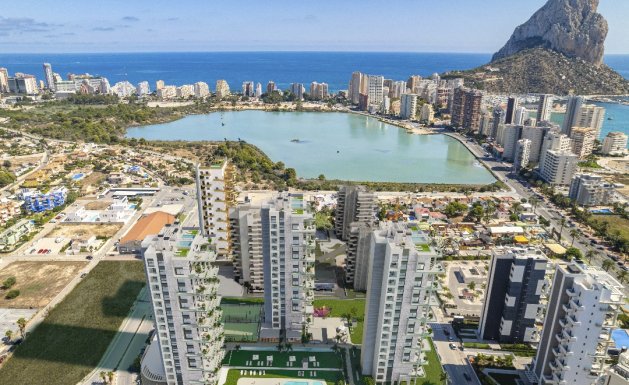


 Alicante. Costa Blanca South




 Contact us