


 Contact us





Does Your Costa Blanca Property Really Need to Face South?
Following the Sun
Recent attention surrounding the eclipse prompted a conversation about something most of us understand in principle, but rarely have reason to consider in any detail: the position of the sun and how significantly it changes throughout the year. From a property perspective, it leads directly to one of the questions we hear most frequently from buyers on the Costa Blanca: “Is the property south facing?”
For some purchasers, a southerly orientation has become almost a prerequisite. A property may offer the right location, accommodation, outside space and price, yet discovering that it faces east or west can introduce immediate doubt. The preference is understandable. South-facing homes are particularly sought after by Northern European buyers intending to spend significant periods of the winter in Spain, and that demand can influence both desirability and value. What deserves closer consideration is whether south facing represents the best choice for every buyer, and whether the premium sometimes attached to it delivers equal value to everybody.
The answer depends largely on how the property will be used. Someone relocating permanently has a very different relationship with their home from a family arriving for a few weeks during the school summer holidays. A couple planning to spend November through March in Spain may place considerable value on winter sunshine, while somebody visiting primarily in July and August could spend much of the afternoon looking for shade. The relevant question is therefore not simply which direction the property faces, but when the buyer wants the sun, where they want it and whether securing that orientation is worth paying more for.
The Sun Does Not Stay in the Same Place
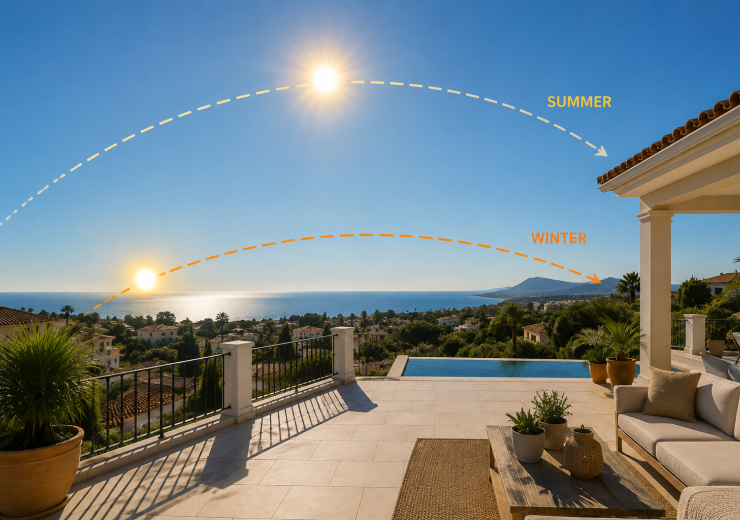
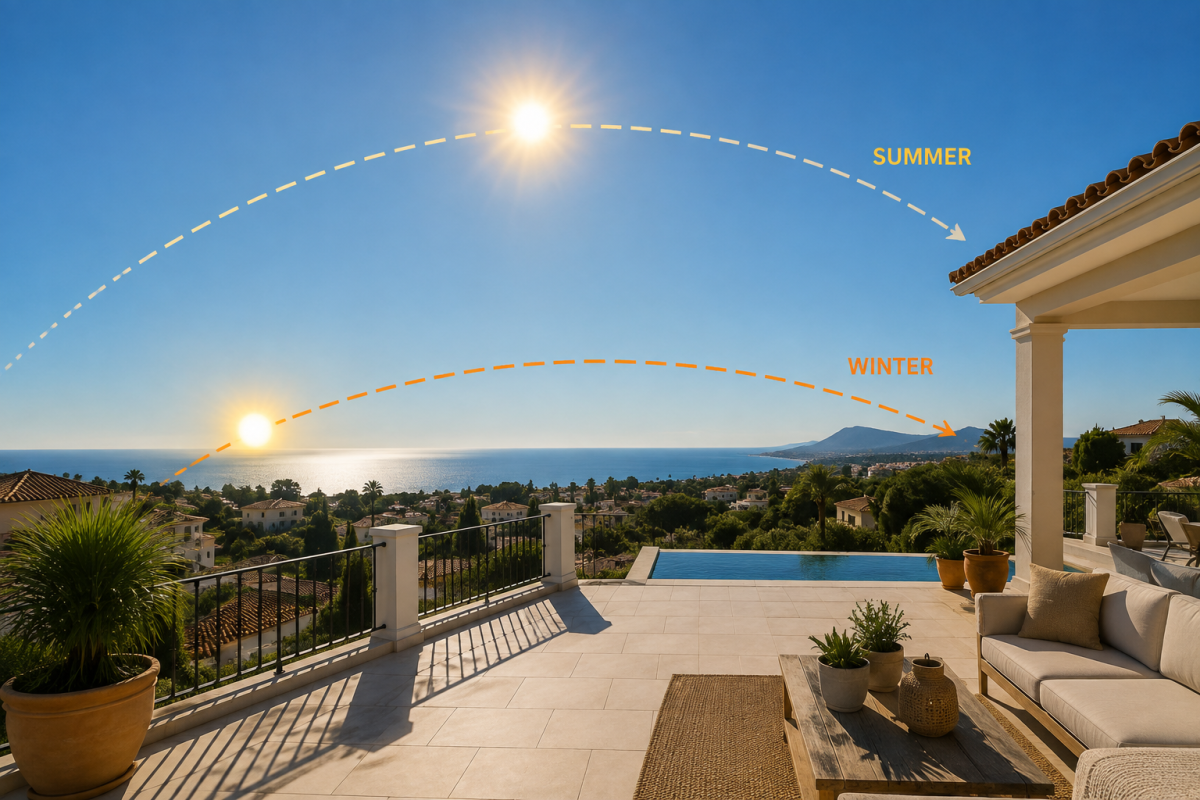
We commonly describe the sun as rising in the east and setting in the west. It is a useful shorthand, but it does not describe how substantially its position changes with the seasons. Around the spring and autumn equinoxes, sunrise occurs approximately in the east and sunset in the west. As summer approaches, sunrise moves towards the north east and sunset towards the north west, while the sun travels much higher across the sky. During winter the pattern reverses, with sunrise towards the south east, sunset towards the south west and the sun remaining considerably lower across the southern sky.
On the Costa Blanca, that seasonal movement has practical consequences for property. Around the summer solstice, Alicante experiences close to fifteen hours between sunrise and sunset and the sun reaches approximately 75 degrees above the horizon around solar noon. Around the winter solstice, daylight falls to roughly nine and a half hours and the midday sun reaches only around 28 degrees. The figures themselves are less important than what they mean at ground level: the sunlight reaching a villa in June behaves very differently from the sunlight reaching exactly the same property in December.
During summer, the higher sun can clear neighbouring buildings, boundary walls and trees relatively easily, allowing terraces and gardens to receive direct sunlight for extended periods. During winter, its lower trajectory produces much longer shadows. A neighbouring villa that has little effect on an outside space in August can become considerably more influential in December.
This explains why the impression created by a property viewing is inevitably seasonal. A terrace may still be bathed in sunshine at six o’clock on a summer evening, while the same space loses direct sun much earlier during winter. Neither experience is misleading. They are simply different versions of the same property, which is why buyers intending to use a home throughout the year need to look beyond the conditions they happen to encounter on the day of the viewing.
Alicante’s climate makes that particularly relevant. Official AEMET climate data records an annual average of 2,851 hours of sunshine, with the monthly average ranging from 164 hours in December to 330 hours in July. Sunshine is clearly not in short supply, but its timing and intensity change significantly through the year. For a property buyer, that distinction is more useful than simply knowing that the Costa Blanca is sunny.
Why South Facing Commands a Premium
The attraction of a southern aspect becomes particularly apparent during winter. With the sun following its lower path across the southern sky, a well-positioned south-facing terrace has greater opportunity to receive direct sunlight through the middle of the day. The same exposure can bring natural light and warmth into living areas, while gardens and terraces may remain comfortable when more shaded outside spaces feel noticeably cooler.
For somebody moving from Northern Europe, this can be an important part of the lifestyle they are buying. Coffee outside on a January morning, lunch on the terrace in February or an afternoon in the garden in December may appear to be relatively small considerations when compared with location, price or the size of the property, but they become part of everyday life once the purchase has been made. For a home occupied throughout winter, an orientation that extends the practical use of outside space can have genuine value.
That helps explain why southern exposure is so frequently requested and why it can influence buyer demand. The premium, however, is not really being paid for a compass direction. It is being paid for the perceived benefit that comes with it: winter light, warmth, greater use of terraces and, potentially, stronger future marketability among buyers looking for the same characteristics.
Summer changes the calculation. The same exposure that is welcome in January requires more careful management in July and August, when shade becomes an important part of comfortable Mediterranean living. Covered terraces, pergolas, awnings, shutters, planting and appropriate glazing all influence how successfully a property handles the stronger summer sun. A well-designed southern aspect can work extremely well throughout the year, but maximum exposure without effective shade is not necessarily an advantage.
This is where the commercial value of orientation becomes more nuanced. A permanent resident or regular winter visitor may derive substantial benefit from southern exposure over many years of ownership. A second-home owner whose visits are concentrated almost entirely in summer is purchasing a different lifestyle. South facing remains a desirable characteristic, but the value of that characteristic to the two buyers is not identical.
Useful Sunshine Matters More Than Maximum Sunshine
The most practical way to assess orientation is often to stop thinking about the compass and imagine an ordinary day in the property. Where will breakfast be eaten? When will the terrace be used? Is the owner normally at home during the afternoon? Does the household prefer lunch in the shade or late sunshine before dinner? These questions translate orientation from a technical specification into something much closer to the way the property will actually be experienced.
An east-facing terrace receives the earlier sunlight, making it particularly attractive for breakfast and the first coffee of the day. During summer, the same space may become increasingly shaded as temperatures rise through the afternoon. For somebody using a holiday home primarily in July and August, that can be an advantage rather than a compromise. Morning sunshine provides the outdoor lifestyle they came to Spain to enjoy, while later shade can make the terrace considerably more comfortable during the hottest part of the day.
West facing reverses much of that pattern. Mornings tend to be more protected, while sunshine becomes more prominent later in the day. Someone who spends their mornings playing golf, goes to the beach or simply prefers to be out during the day may care relatively little about whether the breakfast table is in direct sun. Returning to a sunny terrace in the late afternoon and sitting outside with a glass of wine before dinner may matter considerably more.
Western exposure has its own trade-offs. Late-afternoon sun can be intense during the height of summer, particularly where it reaches large areas of glazing or an uncovered terrace. During autumn, winter and spring, however, exactly the same characteristic can become one of the property's strengths, extending the period during which an outside area remains warm and bright.
South east and south west provide further variations. South east tends to favour the morning and middle of the day before offering greater protection later in the afternoon. South west shifts the emphasis towards the latter part of the day and can be particularly attractive during the cooler months. None is inherently superior. Their relative value depends on the hours during which the owner is most likely to use the property.
This is an important distinction in a market where “sunny” is often treated as an uncomplicated positive. The property receiving the greatest number of hours of direct sunlight is not necessarily the one that offers the most comfortable or useful relationship with the sun. Maximum sunshine and useful sunshine are not the same thing.
A Property Rarely Faces Only One Way
Orientation can also become misleading when an entire property is reduced to a single compass direction. Detached villas, in particular, rarely function that way. A home may have a north-facing entrance while its principal terrace and garden occupy the southern side of the plot. Another may technically have a south-facing façade while the covered dining area used every day faces east. Corner properties and villas with several terraces can provide a combination of orientations, each becoming useful at a different point in the day.
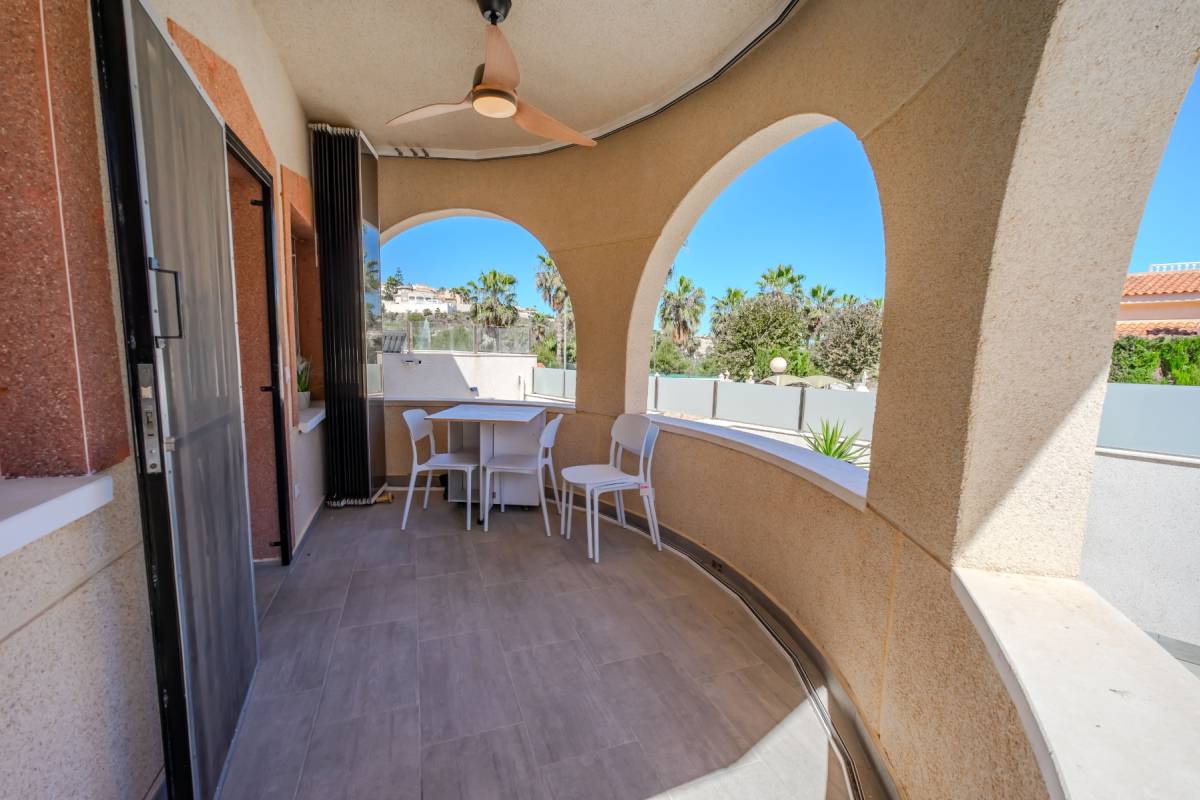
This matters on the Costa Blanca because outside space is not simply an addition to the accommodation. For much of the year, it functions as an extension of it. A covered naya can operate as a second living room, a terrace as an everyday dining area and a garden as somewhere the household spends a substantial part of the day. The orientation of those spaces can therefore be considerably more relevant than the direction of the front door.
Internal layout deserves the same consideration. Morning sunlight in a bedroom creates a different environment from strong western light entering the principal living room later in the day. A home office occupied throughout working hours has different requirements from a guest bedroom used occasionally. A kitchen opening directly onto an east-facing breakfast terrace may contribute far more to one purchaser's enjoyment of a property than a technically perfect south-facing elevation elsewhere on the building.
Orientation unquestionably matters, but it only becomes meaningful when considered in relation to the spaces the owner will actually use. Once that distinction is made, the conversation moves beyond a compass point and towards a much more useful property assessment: how successfully does this particular home manage sun, shade and outdoor living throughout the year?
When the Plot Changes the Picture
Once orientation has been considered in relation to daily life, the next question is whether the property can actually deliver the sunlight its compass direction suggests. Two villas may both be marketed as south facing yet perform very differently throughout the year. Plot position, elevation, surrounding development and architecture can all strengthen or undermine the theoretical advantage of orientation, which is why the property needs to be assessed as a whole rather than by reference to a single point on a compass.
The difference becomes particularly apparent during winter. A south-facing terrace with an open aspect may continue to receive direct sunlight well into the afternoon, while another with a neighbouring villa immediately to the south can fall into shade considerably earlier. Elevation can work strongly in a property's favour where the plot looks across lower lying land, a road, green area or golf course. High boundary walls, mature planting and surrounding buildings can have the opposite effect. None of these factors changes the official orientation, but each can materially alter how much useful sunshine reaches the property.
The swimming pool deserves particular attention. For many Costa Blanca buyers, the pool and surrounding terrace are among the most important parts of a villa, yet their position does not necessarily correspond with the orientation of the house. A pool receiving good direct sunlight through the middle of the day can remain considerably more inviting during spring and autumn, while prolonged shade becomes more noticeable as temperatures fall outside the main summer season. Buyers who expect to use a pool beyond July and August should therefore be interested in its solar exposure, not simply whether the listing describes the villa itself as south facing.
A property offering several well-positioned outside areas can, in practice, be more versatile than one designed around a single large terrace. The ability to follow the sun during cooler months and move into shade during summer gives owners greater control over how they use the property throughout the year. On the Costa Blanca, where outside space forms such an important part of residential life, that flexibility has practical value.
Architecture Has Its Own Relationship With the Sun
The building itself also determines how successfully a home responds to its orientation. Traditional Mediterranean architecture evolved around the need to manage heat and sunlight, using covered terraces, shutters, deeper roof overhangs and more protected openings to provide light while limiting excessive summer heat. These characteristics were functional responses to the climate long before mechanical cooling became commonplace.
Contemporary villas approach the same challenge differently. Large areas of glazing can create exceptional natural light and a strong relationship between internal and external spaces, but their performance depends heavily on the quality of the glass, insulation and provision of external shade. A substantial west-facing window may flood a living room with attractive afternoon light during winter, yet require effective solar control when exposed to the much stronger summer sun.
A well-considered southern orientation can take advantage of the seasonal difference in solar height. Architectural shading can protect windows and terraces from the higher summer sun while allowing the lower winter sun to penetrate further into the property. In that context, orientation is not simply about receiving sunlight. It is about controlling it effectively.
Energy efficiency is part of the same discussion. Orientation alone does not determine heating or cooling costs, since construction quality, insulation, glazing, ventilation and climate systems all play substantial roles. It can, however, influence how hard those systems need to work. A property capable of benefiting from passive winter warmth while providing effective summer shade starts from a stronger position than one relying heavily on air conditioning or heating to compensate for poor solar management.
This is particularly relevant when comparing older resale properties with modern construction. A cool interior during an August viewing may be a welcome characteristic, but a buyer intending to live permanently in Spain should also consider how easily that home will retain warmth and natural light during January. Equally, a spectacularly bright modern living room viewed during winter deserves consideration of how the glazing will perform in midsummer. The objective is not maximum sunlight in every room. It is a building that manages the climate intelligently throughout the year.
North Facing Is Not Automatically a Problem
Of all the orientations, north facing probably encounters the strongest resistance from international purchasers. The concern has a rational basis. A principal north-facing terrace generally receives less direct winter sunshine than one facing south, and surrounding development can restrict exposure further. For somebody buying specifically to spend the winter months outside, that may be a significant disadvantage. It should not, however, become an automatic reason to reject the entire property.
Detached villas rarely operate as though they have only one orientation. A north-facing entrance or covered terrace may be accompanied by a sunny garden to the south, a pool positioned to the side of the house, an east-facing breakfast area or a roof solarium with extensive exposure. Corner plots can provide several different aspects, giving owners a choice between sunlight and shade as the day progresses.
That flexibility becomes particularly valuable during summer. Comfortable outdoor living in July and August is not about remaining in uninterrupted sunshine from morning until evening. A naturally shaded terrace can become one of the most frequently used areas of the home, particularly for lunch or during the hottest part of the afternoon. If other parts of the plot receive sufficient sunshine, shade around the principal seating area can be an advantage rather than a deficiency.
The relevant distinction is therefore between a property that genuinely lacks useful natural light and one that simply contains north-facing spaces. Those are not the same thing. The latter may work extremely well for a summer owner, particularly where the plot provides a choice of exposures. This is another reason why rejecting properties solely on the orientation displayed on a portal can unnecessarily restrict an otherwise strong search.
The Price of Chasing the Sun
Orientation becomes a business consideration when it begins to affect what buyers are prepared to pay. South-facing homes are widely sought after on the Costa Blanca, particularly among international purchasers, and that preference can support stronger marketability. Current property commentary in the Alicante market continues to identify southern exposure as particularly attractive for winter warmth and year-round use.
The difficulty is that properties are rarely comparable enough for orientation to be considered in isolation. The south-facing villa may occupy the smaller plot, sit on the busier road or offer less privacy. Another property may face south east but occupy a better position, provide a more open outlook and offer substantially more usable outside space. At that point, the question is no longer whether south facing has value. It clearly does. The question is what the buyer is giving up, or paying, to obtain it.
Location should remain particularly important in that calculation. A perfectly orientated property in an area that does not suit the buyer's lifestyle remains a property in the wrong location. If a south-east facing villa allows its owners to walk to restaurants and amenities, occupies a quieter street and provides greater privacy than a due south alternative, the additional sunlight represented by a relatively small difference in orientation may have little bearing on which property ultimately provides the better ownership experience.
Views create a similar trade-off. The strongest outlook over the Mediterranean, a golf course or the surrounding landscape may happen to face west. A buyer who expects to spend their evenings outside could derive considerably more enjoyment from that combination of view and late sunlight than from a southern aspect overlooking something less attractive. A permanent resident who prioritises winter warmth may reasonably reach the opposite conclusion. Neither buyer is making the wrong decision. They are assigning value according to different patterns of use.
This is where property purchasing benefits from a clear distinction between features that can be changed and those that cannot. Kitchens can be replaced, bathrooms modernised and additional shade created with awnings or pergolas. Location, plot position, surrounding development, views and the fundamental relationship between the property and the sun are considerably more permanent. The strongest purchase is therefore rarely achieved by allowing one desirable characteristic to override the quality of the property as a whole.
Are You Actually Going to Be Here in January?
For second-home buyers, this may be the most commercially relevant question in the entire discussion. If part of the attraction, and potential premium, attached to south-facing property comes from its winter performance, its personal value inevitably depends on whether the owner will actually be in Spain during winter.
For somebody spending several months of the year on the Costa Blanca, including December, January and February, orientation can have a meaningful impact on everyday life. Winter sunlight can extend the usable hours of terraces and gardens and improve natural light inside the home. Over many years of ownership, paying more for a property that consistently provides those benefits can represent entirely sensible value.
The calculation changes for a family whose use is concentrated almost exclusively in July and August. Sunshine during those months is abundant. Their priorities may be a pool receiving good sunlight, a comfortable place for lunch out of the strongest heat and an outside area that remains pleasant into the evening. An east or south-east facing terrace could serve that pattern extremely well, particularly where the property provides a mixture of sunny and protected areas.
Spring and autumn owners sit somewhere between those positions. These are among the most comfortable periods for outdoor living on the Costa Blanca, when sunshine remains highly desirable without the intensity of midsummer. South east can work particularly well for buyers who value mornings and lunchtime outside, while south west may appeal more strongly to those who favour afternoon and evening use.
The commercial principle is straightforward: a premium represents good value only when the characteristic being paid for delivers a meaningful benefit to the purchaser. South facing may justify that premium for a permanent resident or regular winter visitor. For somebody who will rarely see the property between October and May, a superior location, greater privacy, better views or more usable outside space may represent a more intelligent allocation of the same budget.
That distinction also matters when considering future resale and investment, where personal preference has to be balanced against the characteristics the wider market is likely to value.
Permanent Home, Holiday Home or Investment?
How a property will be used should ultimately determine how much weight orientation receives in the buying decision. A permanent residence must perform throughout the year, while a holiday home may need to work particularly well during a relatively narrow period. An investment property introduces a different consideration again, because the owner is assessing the home not only against personal preferences, but against the expectations of a wider market.
For permanent residents, flexibility can be particularly valuable. A property with several outside areas may offer morning sunshine on one terrace, protection through the hottest part of the afternoon and later sun elsewhere on the plot. During winter, the occupants can make greater use of the sunnier areas; during summer, shaded spaces become equally important. In practical terms, this can be more useful than a single large terrace exposed in the same way throughout the day.
Holiday-home buyers should be realistic about their likely pattern of use. It is easy when purchasing in Spain to imagine regular winter escapes, extended spring visits and long autumn weekends. Some owners use their properties exactly that way. For others, work, school holidays and family commitments mean that most visits fall between June and September. If orientation is affecting the price being paid, the distinction matters. A feature that adds considerable value to a January stay may contribute far less to two weeks in August.
Investment buyers need to consider a broader range of occupants. A property intended for holiday letting may attract guests from spring through autumn rather than solely during peak summer. Good sunlight around a pool can increase its appeal outside July and August, while comfortable shaded areas remain important during the hottest weeks. For investment purposes, a balanced relationship between sun and shade can therefore have broader practical appeal than maximum exposure in a single direction.
Future resale should also form part of the assessment. South facing remains a recognised and desirable characteristic within the international Costa Blanca market, particularly among purchasers looking for winter use, and that can support marketability. It does not follow that homes with other orientations are inherently more difficult to sell. Buyers purchase the complete property, and location, condition, privacy, views, outside space and appropriate pricing remain fundamental to demand.
The strongest properties tend to be those where these characteristics work together. A west-facing villa with an exceptional open outlook, well-designed shade and attractive outside space may be more compelling than a south-facing alternative compromised by neighbouring properties. Equally, an east-facing apartment with a large terrace and uninterrupted morning sunshine may suit its market perfectly. Orientation contributes to value, but it does not create value independently of the rest of the property.
Viewing With the Seasons in Mind
Orientation is one of those characteristics that appears straightforward on paper but is much harder to judge from a single viewing. Buyers frequently inspect a Costa Blanca property during a completely different season from the one in which they ultimately intend to spend most of their time there.
A summer viewing presents the home when the sun is high and daylight hours are long. Someone planning to spend much of the winter in Spain needs to consider how the same property will perform when the sun follows its lower path across the southern sky. The reverse is equally important. A west-facing terrace that feels particularly inviting on a January afternoon will experience much stronger late-day exposure during July and August.
Time of day can distort the impression just as easily. An east-facing terrace viewed late in the afternoon may appear relatively shaded despite having received direct sunlight throughout the morning. A west-facing terrace seen at ten o'clock may seem less appealing to a sun-seeking buyer, only to become one of the brightest areas of the property later in the day. A viewing is therefore a snapshot, not a complete account of how the home behaves.
The assessment does not need to become overly technical. Buyers should spend time in the areas they expect to use and consider them in practical terms. Where would breakfast normally be eaten? Is there comfortable shade for lunch in August? Where will the evening sun fall? If the pool is intended for use in April or October, how exposed is it through the middle of the day? These questions often reveal more about the suitability of an orientation than the compass direction stated in the property particulars.
Where orientation is particularly important, sun-path tools and satellite mapping can provide useful additional context by illustrating seasonal changes in sunrise, sunset and solar position. They do not replace physically assessing the property and its surroundings, but they can help a buyer understand conditions that are impossible to observe during a single appointment.
When Is a South-Facing Premium Worth Paying?
This is ultimately the commercial question. Where two properties are genuinely comparable in location, condition, accommodation, plot and outlook, a strong southern aspect can reasonably attract greater buyer interest. For purchasers intending to spend significant periods on the Costa Blanca during winter, that premium can be supported by a tangible lifestyle benefit: greater opportunity for winter sunshine, more usable outside space and natural light at a time of year when those characteristics are particularly valued.
Over ten or fifteen years of ownership, those benefits can accumulate. A permanent resident who regularly uses a sunny terrace throughout December, January and February may reasonably place considerable personal value on the orientation. For that buyer, paying more for the right property is not simply paying for the words “south facing” in the particulars. It is paying for something they expect to use repeatedly.
The calculation becomes less convincing when achieving that orientation requires compromising on characteristics that matter more. Paying substantially more for due south while accepting an inferior location, smaller plot, poorer view or reduced privacy may not represent the stronger purchase, particularly for somebody whose use is concentrated during summer.
This is where the distinction between market value and personal value becomes important. The market may recognise south facing as desirable and that can contribute to future resale appeal. The individual purchaser still needs to determine how much of that value applies to their own circumstances. A characteristic can have genuine market value without justifying an unlimited personal premium.
The principle extends beyond orientation. Property value is created by a combination of characteristics rather than a single specification. Location, plot, views, privacy, condition, outside space and orientation all contribute, but their relative importance changes from one purchaser to another. A disciplined buying decision involves understanding which characteristics will materially improve ownership and which are being pursued largely because the market has taught buyers to regard them as essential.
There Is No Perfect Compass Direction
South facing deserves its reputation on the Costa Blanca. For permanent residents and those spending significant periods here during winter, a well-positioned southern aspect can materially improve natural light, warmth and the usability of outside space. It can also strengthen a property's appeal within an international resale market where winter sunshine remains an established consideration.
It is not, however, a universal definition of the best property. East can provide the morning sunshine that makes breakfast outside one of the everyday pleasures of owning a home in Spain, followed by welcome shade as a summer afternoon becomes hotter. West can suit somebody whose lifestyle revolves around the latter part of the day, bringing sunshine to the terrace when they return home and creating the setting for an evening drink or dinner outside. South east and south west provide different balances between those experiences, while north-facing spaces can offer valuable summer protection where the wider plot provides sufficient sunlight.
The eclipse may have prompted the original conversation about where the sun sits in the sky, but the property point is much broader. The sun is not fixed above the Costa Blanca. Its position changes throughout the day and its path changes significantly throughout the year. A property therefore does not have one permanent relationship with sunlight simply because its listing describes it as north, south, east or west facing.
For buyers, the more useful question is not simply “Is it south facing?” It is where the sun will be when they are actually going to be in the property, which parts of the home it will reach and whether that relationship suits the way they intend to live.
For one buyer, that may mean a south-facing terrace where lunch can still be enjoyed outside in January. For another, it may mean morning sunshine over coffee followed by shade during an August afternoon. Someone else may place considerably greater value on the final hours of light, sitting outside with a glass of wine as the sun begins to set.
There is no universally perfect orientation because there is no universally identical way of living on the Costa Blanca. The best orientation is the one that works with the seasons you will be here, the hours you spend at home and the lifestyle you are actually buying. That is a stronger basis for choosing a property than simply following the compass.
About the Author
Shelley Scott
Property Consultant & Business Operations
Right Priced Real Estate
Working closely with buyers and sellers across the Costa Blanca provides first-hand insight into the factors that ultimately influence a property decision. Orientation is one of those factors. It is frequently reduced to a preference for south facing when, in practice, its value depends on the property, its surroundings and, most importantly, how and when the home will actually be used.
At Right Priced Real Estate, we encourage buyers to consider the complete picture: location, orientation, outside space, surroundings, condition and long-term value, rather than allowing a single requirement to determine the search. Understanding how a property performs throughout the seasons can be just as important as understanding its price, particularly for those planning to make the Costa Blanca part of their everyday life.
Sources
Agencia Estatal de Meteorología (AEMET)
Standard climate values for Alacant/Alicante, including monthly and annual sunshine hours. AEMET records an annual normal of 2,851 sunshine hours for its Alicante station for the 1981–2010 reference period.
AEMET climate data for Alicante
Time and Date
Sunrise, sunset, day length, solar-noon position and seasonal solar data for Alicante. Its 2026 solar tables show the summer sun reaching approximately 75° above the horizon around solar noon, supporting the seasonal comparison used in the article.
Alicante sun and daylight data
Image gallery


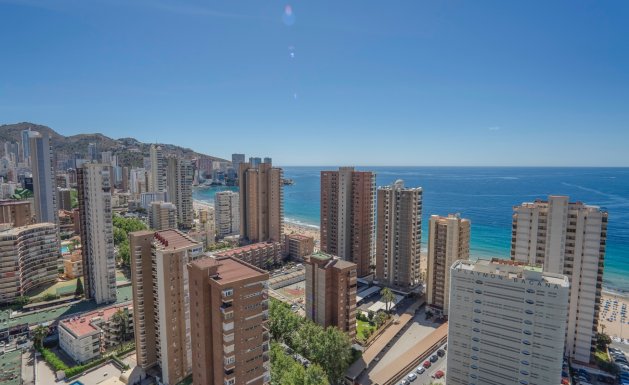
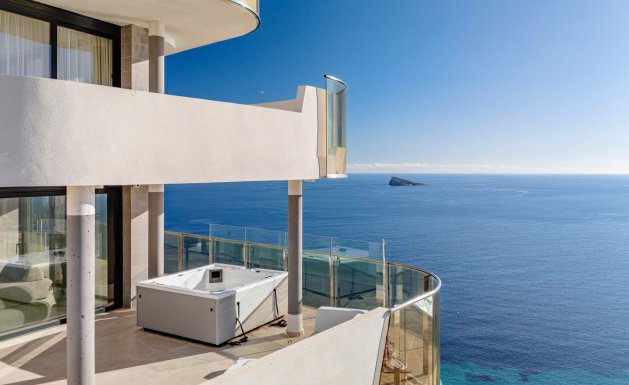
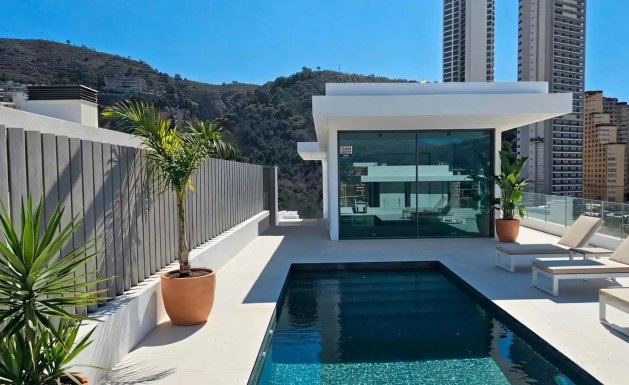
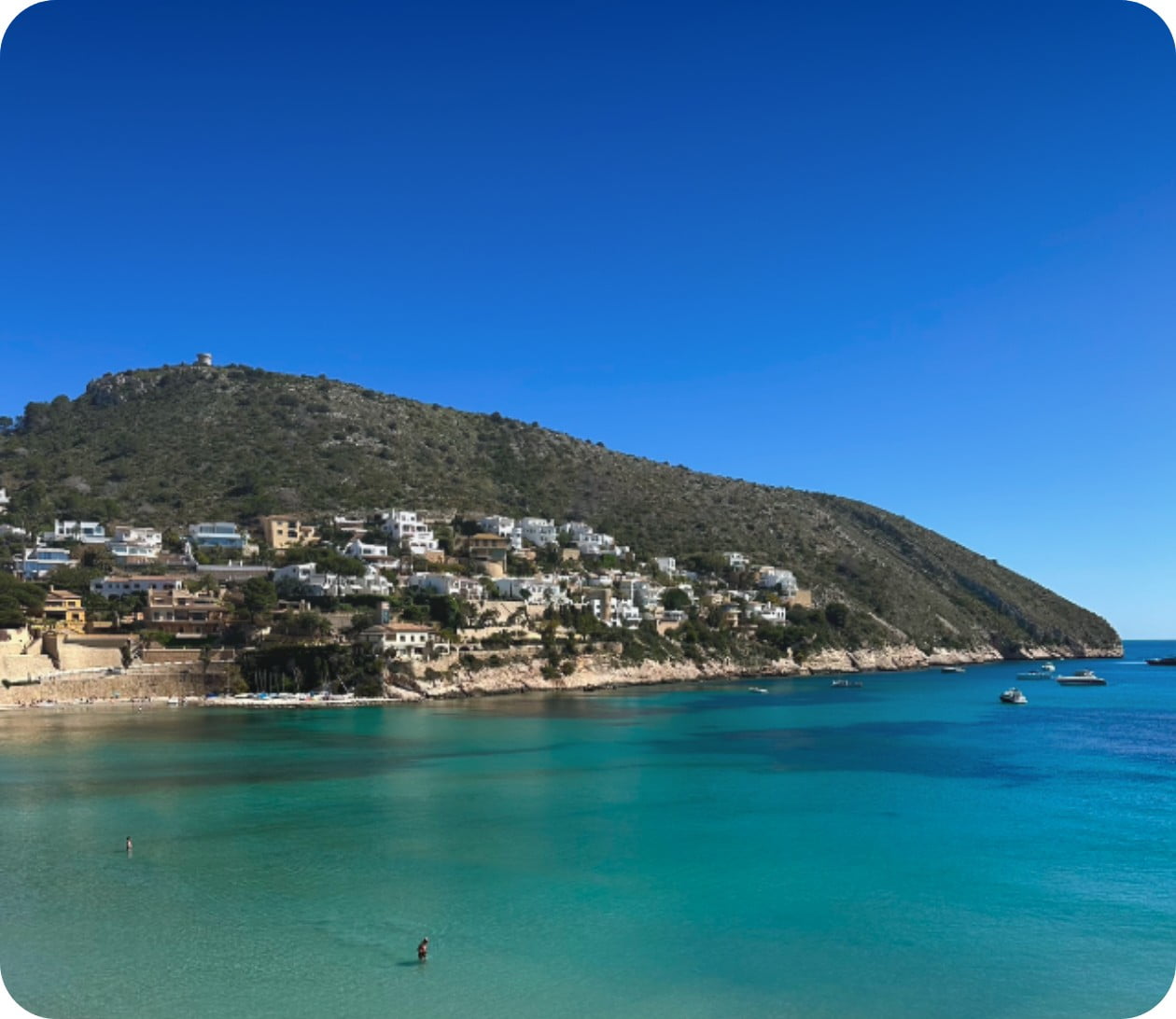
 Benidorm. Costa Blanca North



 Contact us