


 Contact us








New Build or Resale on the Costa Blanca: Where Is the Better Buy?
New build or resale is one of the first decisions many Costa Blanca buyers make, often before they have properly explored what their budget can achieve. Some arrive determined to buy something contemporary, energy efficient and ready to enjoy without renovation. Others concentrate immediately on resale, expecting more space, larger plots or better value for their money.
Both approaches are understandable, but neither should automatically define the search.
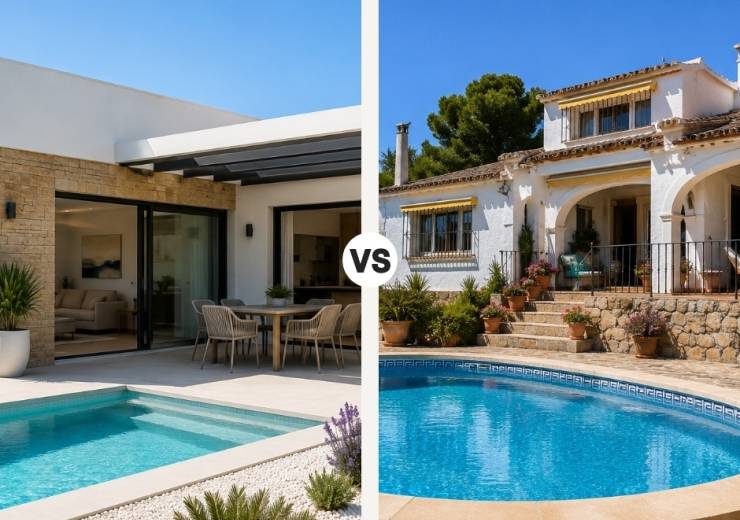
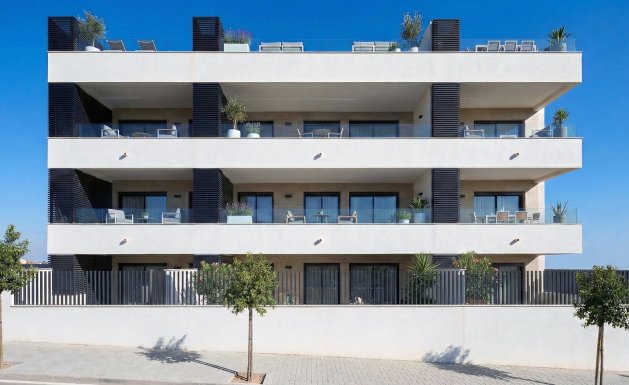
The Costa Blanca now has two very different property markets operating alongside one another. New developments offer contemporary architecture, modern construction standards and homes designed around today's expectations of living in Spain. The resale market ranges from traditional villas requiring considerable modernisation to beautifully renovated properties occupying established plots and locations that would be difficult to reproduce today.
The more useful comparison is not simply new against old, but what the same total budget actually achieves in each market. A €350,000 new build and a €350,000 resale may have the same asking price, yet they will not necessarily cost the same to acquire or own. Purchase taxes differ, while furnishing, landscaping, energy performance, maintenance and renovation can substantially change the financial picture. The properties themselves may also offer very different combinations of space, land, location and convenience.
For buyers, particularly those searching from overseas, this distinction matters. The property that initially looks more expensive may require considerably less expenditure after completion, while the apparently cheaper alternative may offer far more property but need significant investment to bring it to the standard the buyer wants. Value only becomes clear when the complete proposition is considered.
What are you paying for with new build?
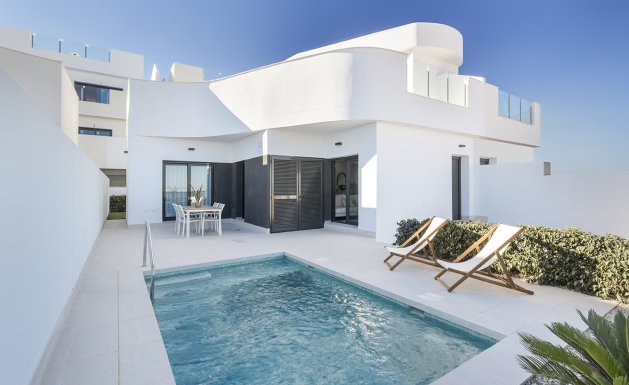
The appeal of modern construction goes further than clean lines and a new kitchen. New properties increasingly reflect the way people actually want to live on the Costa Blanca, with open plan interiors, larger areas of glazing and a stronger relationship between the living space, terrace, garden and swimming pool.
There is also an important difference within the building itself. Spain's construction and energy standards have developed considerably, and new buildings are subject to energy performance requirements and certification at both project and completed building stage. Depending on the specification, modern construction may incorporate improved insulation and glazing, more efficient heating and cooling, aerothermal systems, solar installations and other technologies intended to improve comfort and reduce energy consumption.
For somebody purchasing a holiday home occupied for only a few weeks each year, energy performance may be one consideration among many. For a buyer relocating permanently, it can carry considerably more weight. A home on the Costa Blanca needs to perform through winter as well as summer, and the cost of heating water, maintaining comfortable temperatures and cooling a property during the hottest months becomes part of the long term cost of ownership.
Convenience has a value too. A buyer moving between countries may have little appetite for immediately replacing windows, updating climate control or organising building work. A well specified new property can remove much of that initial workload. Current Spanish building legislation also establishes defined periods of responsibility for certain categories of construction defects, including specified finishing, habitability and structural issues. The often quoted ten year period should not, however, be interpreted as a general warranty covering everything that could happen to a new home.
For the right buyer, paying more for modern construction can therefore be entirely rational. The question is whether that premium represents value for the individual buyer, rather than whether new build is inherently worth more.
Look beyond the show home
One of the easiest mistakes when comparing new developments is to compare the lifestyle being presented rather than the property actually being purchased.
A professionally dressed show home demonstrates how the finished property could look, but furniture, decorative lighting, upgraded appliances, landscaping, pergolas and other finishing touches may not form part of the standard purchase price. Depending on the development, buyers should also establish precisely what is included in relation to swimming pools, air conditioning, kitchen appliances, fitted wardrobes and external finishes.
This can materially change the comparison. Two villas may both be advertised at €400,000, but if one includes a pool, landscaping, appliances and a higher specification while the other requires substantial additional expenditure to reach a similar standard, they are not equivalent €400,000 purchases. Furnishing is particularly easy to overlook for overseas buyers, as beds, sofas, dining furniture, lighting, window dressings and outside furniture can add a meaningful amount to the final budget.
There is nothing unusual about developers offering different specifications, upgrades or furniture packages. The important distinction is between the property being presented and the property being delivered. A meaningful comparison considers the contractual specification, energy performance, outside space, expected completion, communal costs where applicable and anything still required after the keys are handed over.
The relevant figure is therefore not simply the asking price. It is what the property will have cost by the time it is ready to be used as intended.
Where resale changes the calculation
Resale offers a different set of advantages, and its strongest argument is not necessarily price. In many established Costa Blanca locations, the real value lies in assets that are increasingly difficult to recreate.
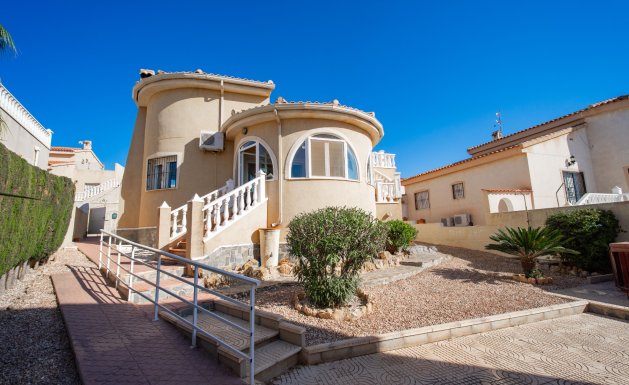
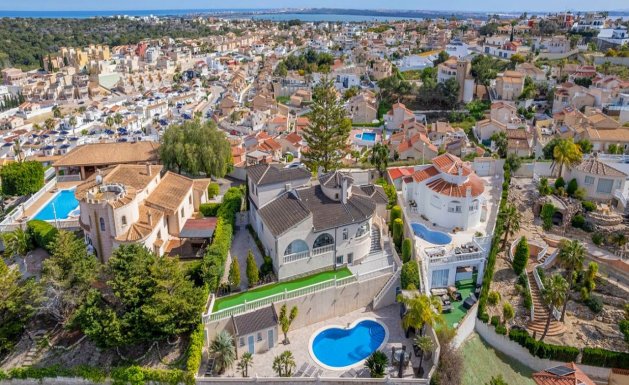
Villas built twenty or thirty years ago may occupy substantially larger plots than comparable modern developments. Mature gardens, established planting and greater separation between neighbouring homes can provide privacy and outside space that would be considerably more expensive to reproduce through new construction today.
Location can be even more important. Established residential areas, particular golf positions, properties within walking distance of town centres and sought after streets may have very limited land remaining for development. In these circumstances, a buyer concentrating exclusively on new construction may unintentionally remove some of the strongest locations from their search.
This is where one of the simplest rules of property remains relevant: you can modernise the house, but you cannot move the plot.
A resale property may also provide considerably more physical property for the same budget. The trade off might be an older kitchen, less efficient glazing or installations that will eventually need replacing, but the buyer may gain a larger villa, private pool, garage, mature garden and substantially more outside space. Somebody looking for a low maintenance holiday home may actively prefer the smaller modern plot, while a permanent resident wanting privacy, storage or space for visiting family may reach the opposite conclusion.
It is equally important not to confuse resale with dated. The Costa Blanca has a significant stock of properties that have already been modernised, sometimes extensively. A renovated resale can combine contemporary interiors, upgraded installations and modern outside living with an established plot and location. For some buyers, this is where the two markets meet.
When does renovation make financial sense?
Properties requiring work can offer excellent opportunities, but only when the renovation is considered as part of the purchase rather than something to worry about later.
A €300,000 villa requiring €100,000 of work is effectively a €400,000 property project before allowing for purchase taxes, professional fees and contingency. The useful comparison is therefore between what approximately €400,000 ultimately produces in each market, not between a €300,000 asking price and a €400,000 completed new build.
That calculation may still favour the resale strongly. If the finished property provides a larger home, an established plot and a location where an equivalent modern villa would cost considerably more, the renovation could represent very good value. If the buyer ultimately spends the same amount to create a property that still compromises on location, space or other priorities, the economics become less convincing.
Time also has a value, particularly for overseas owners. Coordinating architects, licences, contractors and materials from another country is very different from managing a project locally. Some buyers welcome the opportunity to create their own home and are prepared for the process involved. Others would rather pay more at the beginning for a property that is already finished.
Buying what already exists
Resale provides another advantage that is difficult to express purely through numbers: the buyer can experience the finished property and its surroundings before committing to it. Room proportions, privacy around the pool, neighbouring properties, views and road noise can all be assessed, while the wider neighbourhood can be seen as it actually exists rather than how it is expected to look in the future.
Orientation is particularly relevant on the Costa Blanca. A plan may confirm that a terrace faces south, but it cannot fully demonstrate how neighbouring buildings, trees, elevation and the position of the house affect sunlight and shade at different times of the year. With an existing property, much more of that relationship can be understood before purchase.
New build offers a different opportunity. Purchasing during construction can sometimes provide greater choice of position within a development and, depending on the stage reached, the possibility of selecting finishes or making permitted changes. The buyer is exchanging some of the certainty of an existing property for the opportunity to purchase something that has not yet been completed.
That distinction matters because an off plan buyer is not simply choosing a house. They are also relying on the developer, specification, contract, payment structure and eventual delivery of the finished property.
What does the same €350,000 property actually cost?
Once purchase taxes are included, the financial difference between the two markets becomes clearer. This is particularly relevant in the Comunitat Valenciana in 2026 because the general property tax rates changed on 1 June, meaning buyers researching online can still encounter information using the previous figures.
A newly built residential property purchased directly from the developer as a first delivery is generally subject to 10% IVA (VAT). In the Comunitat Valenciana, the transaction is also generally subject to Actos Jurídicos Documentados (AJD), with the general rate reduced to 1.4% from 1 June 2026. A resale purchase is treated differently. Instead of VAT, the buyer generally pays Impuesto sobre Transmisiones Patrimoniales (ITP), with the general Valencian rate reduced to 9% from 1 June 2026. Different rates and reliefs can apply in particular circumstances, so an individual buyer's position should always be confirmed professionally.
Using a €350,000 asking price demonstrates the difference. A new build at €350,000 would ordinarily generate €35,000 in VAT and €4,900 in AJD, giving €39,900 in those two taxes. A €350,000 resale subject to the general 9% ITP rate would generate €31,500 in transfer tax. Before considering the other costs associated with purchasing, the difference is €8,400.
That €8,400 does not automatically make the resale better value. If it subsequently needs new windows, climate control or a significant kitchen renovation, the apparent saving can disappear quickly. Equally, if both properties are finished to a comparable standard and suit the buyer equally well, the additional acquisition tax on the new build is a genuine cost that should form part of the decision.
This is why it is important to establish whether a buyer's stated budget means the property price or the total amount available for the purchase. A buyer with €350,000 available for the property plus costs is looking at a different market from somebody whose entire budget, including taxes and professional costs, is €350,000.
Buying off plan changes the transaction
Not every new build is purchased off plan. Some developments have completed properties available, while others may be approaching completion when a buyer reserves. Where construction is still under way, however, the nature of the transaction changes because the buyer is committing to a future property rather than purchasing something that can already be inspected in its finished form.
That can work extremely well for the right buyer. Somebody planning retirement or relocation in twelve or eighteen months may find that a construction programme fits neatly with their own timescale. Purchasing earlier can also provide a wider choice of positions, orientations and property types, while some developers allow purchasers to select finishes or make certain permitted changes before construction reaches the relevant stage.
The important difference is that the contract and specification become fundamental parts of what is being purchased. Off plan payment structures vary between developments, but payments may be made at different stages rather than the majority of the purchase price being paid only when the keys are handed over. Spanish legislation provides protections for qualifying advance payments made towards homes under construction, including requirements concerning guarantees or insurance and the handling of those funds.
Independent legal representation is therefore particularly important. The buyer's solicitor should establish what protection applies, review the contractual documentation and explain the commitments being made. A professionally marketed development or a developer with an excellent reputation does not remove the need for independent legal due diligence.
The developer is part of the purchase
When buying resale, attention naturally centres on the property and seller. With an off plan purchase, the business behind the development becomes another part of the decision.
Previous projects can provide useful context. What has the developer delivered before? How do completed developments compare with the original marketing and specification? What is the standard of the finished communal areas, and how has the company dealt with snagging and after sales matters once purchasers have moved in?
Size alone is not an indication of quality. Smaller local developers can produce excellent properties, while a large company with numerous developments should not automatically be assumed to offer the best option for every buyer. The important point is to understand who is responsible for delivering the property and consider their track record alongside the development itself.
There is also a broader point about how new build property is sold. The same development can often be available through several estate agents as well as the developer's own sales operation. The value of the agent is therefore not simply access to a project. It is knowing how that project compares with the alternatives.
A buyer considering one development should be able to understand what comparable developers are offering, whether another location provides better value, how specifications differ and what the same overall budget could achieve in resale. Good advice occasionally means explaining why the property that generated the original enquiry is not necessarily the one we would recommend.
A discount is not the same as value
Pricing behaves differently across the two markets. A resale property has an individual owner whose circumstances, motivation and willingness to negotiate can vary considerably. The asking price is therefore part of the transaction, but it should not automatically be assumed that every seller will negotiate. A correctly priced property attracting strong interest may leave very little room for movement.
New build pricing is generally more structured because the developer controls the release and pricing of multiple properties within the same project. Prices may change as construction progresses, availability reduces or further phases are released. In some cases there may be incentives, upgrades or packages rather than a straightforward reduction in the advertised price.
For the buyer, the principle remains the same. A discount is not the same as value. Saving €15,000 on the wrong property does not make it a good purchase, while paying the asking price for a correctly valued property that is difficult to replace can still represent a very strong transaction.
Completion and due diligence
Once a new property is completed, the conversation moves from plans and specifications to what has actually been delivered. Even good quality construction can have finishing items requiring correction, which is why snagging and a proper handover are important.
Spanish building legislation establishes different periods of responsibility for specified categories of construction defects. Broadly, these include one year for certain defects relating to execution and finishing, three years for qualifying defects affecting habitability and ten years for specified structural defects affecting mechanical resistance and stability. Again, the commonly used phrase “ten year guarantee” should not be interpreted as ten years of cover for every issue that might arise.
Resale requires a different form of due diligence. Existing homes have a history, and extensions, enclosed terraces, swimming pools or other alterations may have been carried out since the original construction. Something having physically existed for many years should not automatically be taken as confirmation of its legal or administrative position. The buyer's solicitor should examine the relevant documentation, while additional technical advice may be appropriate depending on the property and the buyer's plans.
The same discipline applies to physical condition. An older kitchen is easy to see during a viewing, but windows, air conditioning, electrics, plumbing, waterproofing, pool equipment and exterior maintenance can have a much greater effect on future expenditure. A property does not need to be perfect to represent good value. The buyer simply needs to understand what they are purchasing and what it is likely to require.
Access to property is not the same as understanding the market
By the time many buyers arrive on the Costa Blanca, they have spent months looking at portals, developments, asking prices and floor plans. Some already have a shortlist before they book their flights. Access to information is no longer the difficulty. Understanding how individual properties sit within the wider market is considerably more valuable.
Is the premium on a particular new development justified by its specification and location? What does the same budget buy five or ten minutes away? Could a renovated resale provide more land without compromising on the standard of the home? If an older villa requires significant work, does the finished cost still make sense against a new build alternative?
These are the comparisons where an experienced property adviser should add value. Good advice should also occasionally challenge the original brief. If a buyer arrives determined to purchase new build but everything they describe points towards a renovated villa in an established area, that option deserves to be explored. Equally, somebody repeatedly rejecting resale properties because of the work involved may find that the premium for new construction solves precisely the problems they do not want to take on.
The purpose of professional advice should not be to steer every buyer towards the same answer. It should provide enough market context for them to make a better informed decision.
How we approach it at Right Priced Real Estate
At Right Priced Real Estate, working across both resale property and new developments means our conversation does not need to begin by deciding which side of the market a buyer should purchase from. We begin with the buyer: their budget, intended use, preferred locations, timescale and the compromises they are, or are not, prepared to make.
From there, the market can be compared properly. A buyer considering new build may need to look at several developments rather than one, examining location, developer, specification, what's included, expected completion and overall cost. At the same time, it can be useful to understand what equivalent money buys within the established resale market. The reverse is equally important for somebody considering an older property requiring investment.
Our role as an estate agent is distinct from that of the buyer's independent solicitor. We provide market knowledge, identify and compare properties and developments, discuss pricing and negotiate the transaction. The solicitor independently examines the legal position, contracts and documentation and advises the buyer on the legal implications of the purchase. With off plan property in particular, that separation of responsibilities is important.
Working this way also means accepting that the property that first attracts a buyer's attention will not always be the property they eventually purchase. Quite often, that is evidence that the search has done exactly what it should.
New build or resale?
There is no universal winner. New construction offers contemporary design, modern energy performance, new installations and reduced immediate maintenance, while resale can provide established locations, mature surroundings, larger plots and greater privacy. A property requiring modernisation can offer the opportunity to create something individual, while an already renovated resale may provide much of the contemporary living associated with new construction without sacrificing an established position.
The financial difference matters, but tax alone should never decide which represents better value. Paying less tax on a resale does not make it the better purchase if substantial expenditure is immediately required. Paying a premium for new construction does not make it poor value if that premium delivers the specification, efficiency, convenience and lifestyle the buyer actually wants.
Ultimately, the strongest purchase is the one that still makes sense when the complete investment is considered. For buyers beginning their search, keeping both markets open for longer provides a much clearer picture of what their money can genuinely achieve.
Kitchens, technology and interiors can all be changed over time. Location, plot and the fundamental decision about where to invest your money are considerably harder to alter.
The question was never simply new build or resale. It is which property is the better buy for you.
A note on tax and legal information
The tax, building and energy information in this article reflects the general position at the time of writing in August 2026. Individual circumstances, property values and the nature of a transaction can affect the taxes and legal requirements applicable to a purchase. Buyers should obtain independent advice from their solicitor and, where appropriate, a tax or technical professional before entering into a transaction.
Written by Shelley Scott
Property Consultant & Business Operations, Right Priced Real Estate
Shelley Scott works with buyers and sellers across the Costa Blanca and supports the day to day business operations of Right Priced Real Estate. With extensive experience in the local property market, she regularly writes about buying and selling property in Spain, market trends, lifestyle and the communities that make the Costa Blanca one of Europe's most desirable places to live, retire and invest.
Sources
Agencia Tributaria, Spanish Tax Agency
Official guidance on VAT and transfer tax treatment when purchasing new and previously owned residential property in Spain.
Agencia Tributaria: VAT and ITP when buying property
Boletín Oficial del Estado, Real Decreto 390/2021
Spanish legislation governing energy performance certification of buildings, including requirements applicable to new construction.
Real Decreto 390/2021, BOE
Boletín Oficial del Estado, Ley 38/1999 de Ordenación de la Edificación
Spanish building legislation covering responsibilities for specified construction defects and protections relating to advance payments for qualifying homes under construction.
Ley 38/1999, BOE
Boletín Oficial del Estado, Comunitat Valenciana tax legislation
Regional legislation covering ITP and AJD, including the general rates applicable from 1 June 2026.
Ley 5/2025, BOE
Generalitat Valenciana, Agencia Tributaria Valenciana
Official regional information relating to ITP and AJD in the Comunitat Valenciana.
Agencia Tributaria Valenciana
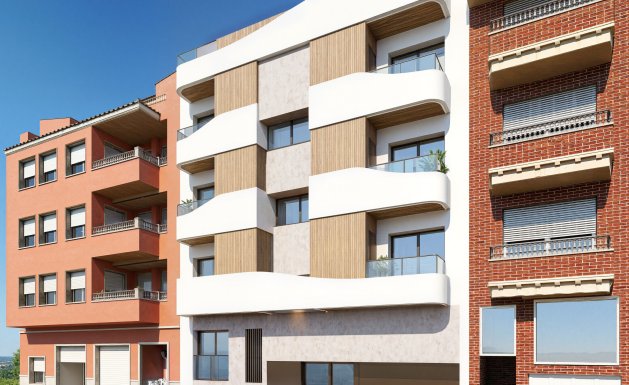


 Guardamar del Segura. Costa Blanca South





 Contact us