


 Contact us









Buying Property in Spain: What Happens After You Say Yes?
Finding the right property is often the part of buying in Spain that receives the most attention. Buyers spend weeks or months researching locations, viewing properties, comparing prices and deciding which features are essential. Then the right property appears, an offer is accepted and the process changes almost immediately.
For international buyers in particular, what happens next can be less familiar. Spain has its own legal and administrative procedures, and the route from an accepted offer to receiving the keys may be quite different from the process a buyer knows in the UK, the Netherlands, Belgium, Scandinavia or elsewhere in Europe.
There is no single timetable or payment structure that applies to every Spanish property transaction. The amount paid to reserve a property, the deposit required under a private contract and the period allowed before completion are matters that can vary and should be clearly established in the relevant agreements.
Nevertheless, most resale purchases follow a recognisable sequence. Understanding those stages, and particularly the point at which financial commitments become more significant, can make the entire experience considerably easier.
Your Offer Has Been Accepted
Once buyer and seller agree on the price and principal terms, the property will commonly move into a reservation stage while the transaction progresses.
A reservation payment is frequently made at this point. The amount varies according to the property and transaction, although a figure of several thousand euros is common in Costa Blanca resale transactions. Where the purchase continues, that amount would normally be taken into account as part of the money already paid towards the agreed price.
The reservation document is important. It should identify the property and parties, record the agreed price and explain the basis upon which the reservation payment is being made, including the circumstances in which it may or may not be refundable.
The buyer should also appoint an independent Spanish lawyer at an early stage if this has not already been done. Legal due diligence is an important part of buying property in Spain and should not be left until shortly before the notary appointment.
Once the property is reserved, the transaction begins moving towards the more substantial contractual stage.
The Contrato de Arras
One of the terms international buyers quickly encounter in Spain is Contrato de Arras.
An arras agreement is a private contract between buyer and seller that records the terms upon which the parties intend to proceed with the purchase. Depending upon the transaction, it can include the purchase price, the amount being paid, the deadline for completion and conditions that have been specifically negotiated between the parties.
A deposit of around 10% of the purchase price is common in Spanish resale transactions, although neither the percentage nor the timing should simply be assumed. Different amounts and structures can be agreed.
Sometimes an initial reservation amount is subsequently counted towards the agreed deposit. The balance required to reach the contractual deposit is then paid in accordance with the agreement. In other transactions, the payment arrangements may be structured differently.
What matters is not whether a transaction follows an assumed formula, but whether the buyer understands exactly what has been agreed before transferring substantial funds.
Why the 10% Deposit Needs to Be Taken Seriously
The deposit stage represents a considerable increase in the buyer's financial commitment.
Article 1454 of the Spanish Civil Code provides for an arrangement under which a buyer can withdraw by forfeiting the arras and a seller can withdraw by returning double the amount received. However, buyers should not take this simple description to mean that every agreement called an arras contract automatically has identical consequences.
The nature and wording of the contract matter.
This is why the agreement should be reviewed by the buyer's independent lawyer before it is signed and before a substantial deposit is transferred. The buyer needs to understand not only how much is being paid, but also what happens if either party subsequently cannot or does not wish to complete.
The circumstances surrounding a transaction can also affect what needs to be written into the contract. A cash buyer who is ready to proceed may have very different requirements from someone whose purchase depends upon obtaining mortgage finance or selling another property.
The important point is simple: a buyer should never regard the deposit as merely another administrative payment. It is part of a contractual commitment and should be treated accordingly.
Buying With a Mortgage Is Different
A purchase dependent upon mortgage finance requires additional consideration.
An initial conversation with a bank, mortgage adviser or broker should not be confused with final mortgage approval. The lender will need to assess the borrower and, where applicable, the property being offered as security.
Spanish residential mortgage lending is governed by specific legislation, including Law 5/2019 on real-estate credit contracts, which contains requirements concerning transparency, borrower information, creditworthiness assessment and the mortgage process.
From the property buyer's perspective, one of the most important questions is what happens if the mortgage is not ultimately approved.
A buyer should not assume that failure to obtain financing automatically releases them from a purchase contract or guarantees the return of money already paid. If the purchase is dependent upon obtaining a mortgage, that should be raised with the lawyer before entering into a binding agreement. Where appropriate and accepted by the parties, the contract can address the financing position.
Mortgage transactions can also affect the completion timetable. Bank valuations, financial checks, mortgage documentation and statutory requirements have to progress alongside the legal work on the property itself.
For this reason, buyers who require finance should make that clear from the beginning rather than attempting to introduce a mortgage condition after substantial contractual commitments have already been made.
What Is the Lawyer Actually Checking?
Legal due diligence is much more than checking that the person selling the property has the correct name on the deeds.
One of the documents commonly examined is the Nota Simple from the Spanish Property Registry. This provides information about the registered property, ownership and registered rights or charges affecting it.
The lawyer may also examine matters including outstanding mortgages or charges, local property taxes, community information where relevant and the documentation associated with the particular property.
An especially important question is whether the physical property broadly corresponds with its legal and registered description.
This matters because properties change over time. Owners build extensions, enclose terraces, add swimming pools, create storage areas, alter underbuilds or carry out other improvements. Sometimes the appropriate documentation has been updated at the same time. Sometimes it has not.
A discrepancy does not automatically mean that the property cannot be sold or that there is a serious problem. It does mean that the position needs to be understood.
Depending upon the circumstances, an architect or other technical professional may need to become involved, certificates may be required or documentation may need to be corrected or updated. Some alterations may be capable of being regularised, while others may need to be treated differently.
This is precisely why these checks take place before completion.
The objective is not to make a transaction unnecessarily complicated. It is to ensure that the buyer understands what is being purchased and that any relevant issue is identified and dealt with appropriately.
How Long Does the Purchase Process Take?
There is no universal completion period for a Spanish resale property.
Several weeks to a few months is common for many straightforward transactions, but the appropriate timetable depends upon the circumstances of the buyer, seller and property.
A cash purchase involving a property with straightforward documentation may progress relatively quickly. A mortgage purchase may require additional time. A property requiring updated technical or legal documentation can take longer.
The personal circumstances of the parties matter too. A seller may require time to move, a buyer may be coordinating the sale of another home or both sides may simply agree upon a particular completion date that suits them.
The date agreed in the private contract is therefore important.
If circumstances subsequently require the completion date to change, buyer and seller may agree an extension or revised date. Where this happens, it should be properly documented through their legal representatives rather than simply assumed.
A change in timetable is not necessarily evidence that a transaction is in difficulty. Sometimes a short delay is exactly what is required to resolve a documentation issue properly and allow the sale to proceed safely.
What Is Actually Included With the Property?
This is an area where assumptions can create completely avoidable disagreements.
Many properties on the Costa Blanca are marketed as furnished, partly furnished or sold with certain contents. However, there can be a significant difference between the buyer's interpretation of "furnished" and the seller's.
A buyer may walk through a property and naturally imagine that the garden furniture, television, lamps, pictures, beds, dining furniture or appliances will remain. The seller may have a completely different understanding.
Where contents form part of the agreement, an inventory can be extremely useful.
An inventory identifies the items that the parties have agreed will remain with the property. It can be particularly valuable where a property contains substantial furniture, outdoor equipment or other items that materially influenced the buyer's expectations.
It is also important to distinguish between fixtures and movable contents. A fitted kitchen, built-in wardrobes or fixed installations are not the same as a freestanding sofa, television, dining table or garden furniture.
The safest approach is clarity. If an item matters to the buyer or seller, it is better to agree its position before completion rather than argue about it on the morning of the notary appointment.
The Final Walkthrough
A final walkthrough before completion is common and can be an important practical part of the process.
This is not normally intended to be a new structural survey or an opportunity to renegotiate a transaction without justification. It allows the buyer to confirm that the property remains substantially in the expected condition immediately before ownership changes.
Where an inventory has been agreed, the walkthrough also provides an opportunity to confirm that the relevant contents remain at the property.
This can be particularly useful for overseas purchasers. Several weeks or months may have passed since their original viewing, and some buyers may have completed much of the intervening transaction remotely.
If something material has changed, it is better to discover it before signing than afterwards.
Any significant issue should be raised promptly with the estate agent and legal representatives so that it can be addressed before completion.
Completion at the Notary
The formal completion of a Spanish property purchase normally involves signing the escritura pública de compraventa, the public deed of sale, before a Spanish notary.
The notary has an important public and legal role, but the notary should not be confused with the buyer's independent lawyer. The lawyer advises and represents the buyer's interests throughout the transaction, whereas the notary performs the public function associated with the deed and completion formalities.
Before signing, the parties and their representatives will have coordinated the final purchase figures, payment arrangements and relevant documentation.
Where an existing mortgage or other registered matter needs to be dealt with as part of the sale, the lawyers and other professionals involved coordinate the necessary arrangements.
The remaining purchase price is dealt with according to the agreed completion arrangements and the public deed is signed.
Then comes the moment most buyers have been waiting for: the keys.
What Happens After You Get the Keys?
Receiving the keys feels like the end of the purchase process, but there are still important administrative matters to complete.
The applicable purchase taxes must be dealt with and the deed subsequently presented for registration so that the buyer's ownership can be recorded at the Spanish Property Registry. The precise tax treatment depends upon the type of property and transaction, so buyers should obtain advice relating to their individual purchase rather than relying upon a generic percentage found online.
Utilities are another immediate consideration. Electricity, water and other services may need to be transferred into the new owner's name, with new direct debits established where necessary.
If the property forms part of a community of owners, the relevant administration should also have the new owner's details.
Insurance should be arranged appropriately, and mortgage buyers should ensure that they understand any requirements imposed by their lender.
Then there are the practical aspects of ownership. Locks may need changing, internet installed or transferred, alarm systems updated, furniture delivered and maintenance arrangements established.
For non-resident owners, it is also worth understanding the ongoing tax and administrative obligations associated with owning Spanish property.
The transaction may have completed, but successful ownership begins with making sure these practical matters are properly organised.
When the Paperwork Does Not Match the Property
One of the more confusing situations for an overseas buyer is discovering that something visible at the property is not described in exactly the same way in the registered documentation.
This can happen for many reasons and does not automatically indicate wrongdoing.
An older villa may have been extended. A pool may have been constructed later. An area underneath a property may be used for storage or recreation but not qualify as legally declared habitable accommodation. A terrace may have been enclosed or an auxiliary building added.
What matters is how that element is legally classified and whether anything needs to be done before the sale proceeds.
Buyers should be cautious about treating every physical space as registered living accommodation. A room that is physically being used as a bedroom, office or games room does not necessarily mean that it is legally registered as such.
Similarly, marketing square metres and registered square metres need to be understood in context.
Where a discrepancy is identified, the appropriate professionals can establish the position. Depending upon the issue, this may involve the lawyer, architect, Property Registry, Catastro or local authority.
In some cases the documentation can be updated or an alteration regularised. In others, the existing legal classification may simply need to be clearly understood and accepted by the buyer.
The important thing is transparency before completion.
Cash Buyer or Mortgage Buyer?
Being a cash buyer can simplify part of the transaction because there is no lender approval process running alongside the purchase.
It does not remove the need for legal checks.
A cash buyer should still ensure that the ownership, charges, documentation and legal status of the property have been appropriately reviewed. The absence of a bank does not make those questions less important.
A mortgage buyer, meanwhile, effectively has two processes progressing at the same time: the purchase of the property and the financing of that purchase.
These processes are connected but they are not identical. A lender may require a valuation and its own documentation, while the buyer's lawyer is conducting legal checks relating to the property and purchase contract.
Understanding this distinction helps explain why mortgage purchases sometimes require more coordination and why buyers should begin the financing process as early as reasonably possible.
What Can Cause a Transaction to Change?
Even a well-organised property purchase can evolve between reservation and completion.
A legal check may identify documentation that needs updating. A bank may request additional information. An architect may need to prepare a certificate. A seller may need to deal with an existing mortgage. Buyer and seller may agree to change the completion date.
Occasionally the parties may renegotiate a particular term after receiving new information.
None of this means that changes should be made casually. Once binding contracts have been signed, the contractual position matters. Any significant alteration should be discussed with the relevant legal representatives and documented appropriately.
The important distinction is between a transaction changing by proper agreement and one party simply assuming that an agreed term no longer applies.
Good communication between buyer, seller, agent and lawyers is particularly valuable at this stage.
A Smooth Purchase Is an Informed Purchase
The period after an offer is accepted can feel surprisingly fast. Reservation documents arrive, lawyers request information, deposits become due, banks ask for paperwork and suddenly a notary date appears on the calendar.
The best way to approach this stage is not to memorise one supposedly standard Spanish timetable.
Instead, understand the purpose of each step.
Know what your reservation payment means. Have the private contract reviewed before committing a substantial deposit. Make your financing requirements clear from the beginning. Allow your lawyer to complete the appropriate checks. Clarify what furniture and contents are included. Understand any differences between the physical property and its registered description. Carry out a final walkthrough where appropriate and make sure you know what happens after completion.
Spain has a well-established system for buying and registering property, but every transaction involves its own property, documentation, people and circumstances.
A good purchase is therefore not simply one that reaches the notary quickly. It is one in which the buyer understands the transaction, relevant issues have been properly addressed and both parties arrive at completion knowing exactly what has been agreed.
Then the legal process gives way to the enjoyable part: receiving the keys and making the property your own.
Important Information
This article provides general information about the process commonly encountered when purchasing resale property in Spain. Payment structures, contractual arrangements, timescales, tax treatment and legal requirements vary according to the property and individual transaction.
Buyers should obtain independent legal and, where appropriate, financial and tax advice relating to their own circumstances before entering into binding agreements or transferring substantial funds.
Sources
Boletín Oficial del Estado (BOE)
Spanish Civil Code, including Article 1454 concerning arras.
Boletín Oficial del Estado (BOE)
Law 5/2019 of 15 March regulating real-estate credit contracts.
Colegio de Registradores de España
Property Registry information and guidance relating to registered property information and property transactions.
Written by Shelley Scott
Property Consultant & Business Operations, Right Priced Real Estate
Shelley Scott works with buyers and sellers across the Costa Blanca and supports the day to day business operations of Right Priced Real Estate. With extensive experience in the local property market, she regularly writes about buying and selling property in Spain, market trends, lifestyle and the communities that make the Costa Blanca one of Europe's most desirable places to live, retire and invest.
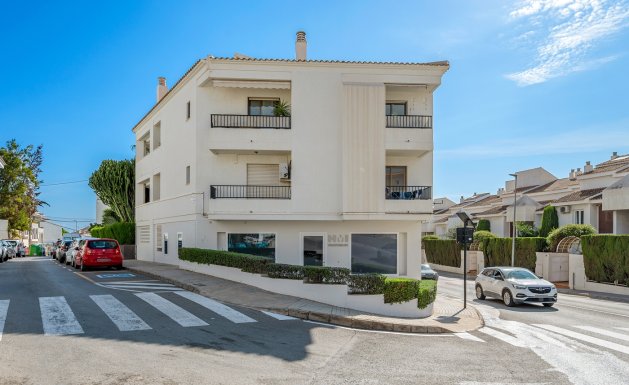


 Alicante. Costa Blanca South








 Contact us