


 Contact us




Building Your Own Home in Spain: Is It Easier Than You Think?
Building Your Own Home in Spain: Is It Easier Than You Think?
When searching for a home on the Costa Blanca, most buyers naturally begin with properties that are already built. They browse villas, arrange viewings and compare locations, prices and layouts, hoping to find a home that offers the right combination of everything they are looking for.
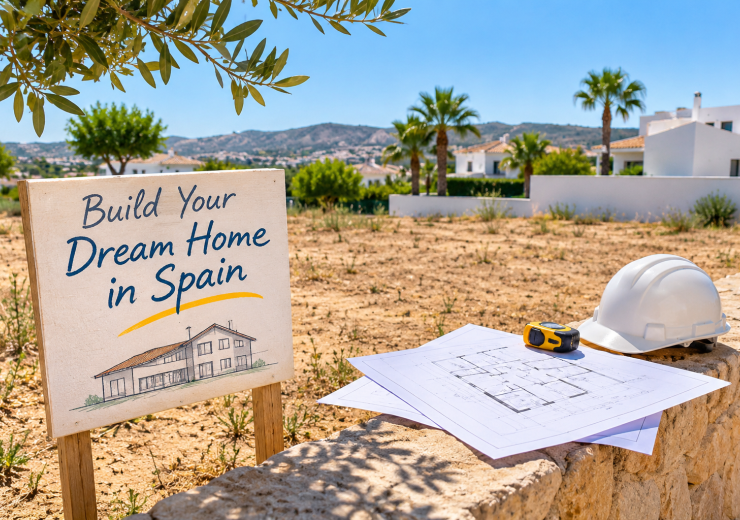
However, there is another possibility that is often overlooked. Instead of searching for a property that already exists, what if you could buy a suitable plot of land and create a home designed around your own lifestyle?
For many buyers, the idea of building a house in Spain initially sounds complicated. There are architects to appoint, planning permissions to obtain, budgets to establish and legal requirements to understand. For those living abroad, the thought of managing construction in another country can make the prospect seem even more challenging.
The reality is that building a home in Spain does require careful preparation, but it does not have to be an overwhelming experience. With the right land, qualified professionals and a clear understanding of the process, it can be a practical alternative to buying an existing property.
At Right Priced Real Estate, we are currently involved in two residential building projects at La Marquesa Golf in Ciudad Quesada, where clients purchased separate frontline golf plots through our agency. Their projects provide a useful example of how the right location, thoughtful design and professional coordination can bring a new home closer to reality.
What If You Could Design the Home You Really Want?
Anyone who has spent months viewing properties will understand how difficult it can be to find a home that meets every requirement. A villa may be in the perfect location but have a layout that does not suit your needs. Another may offer a beautiful garden and swimming pool but lack natural light or practical indoor living space. Even an attractive property can involve compromises that become more noticeable once you imagine living there permanently.
Building offers the opportunity to approach those decisions differently. Rather than adapting your lifestyle to someone else's design, you can work with an architect to develop a home that reflects how you intend to use it.
For some buyers, that might mean a contemporary, open-plan villa with large windows, spacious terraces and a seamless connection between indoor and outdoor living. Others may prioritise comfortable year-round accommodation, guest bedrooms for visiting family, a home office or a practical layout that will continue to suit them as their circumstances change.
Modern construction also provides the opportunity to incorporate energy-efficient systems, effective insulation and carefully considered orientation from the beginning. On the Costa Blanca, where sunshine and outdoor living are central to everyday life, the positioning of living areas, terraces and swimming pools can have a significant influence on how comfortable and enjoyable a home becomes.
Every design must, of course, comply with the planning and technical restrictions of the chosen plot. Nevertheless, having the opportunity to make these decisions at the design stage is one of the strongest reasons to consider building.
It All Begins with the Right Plot
One of the most important decisions is made before any architectural plans are drawn up: choosing the land.
A building plot should never be assessed on its location and appearance alone. Its planning classification, permitted use, building restrictions, access and availability of services all need to be checked. The size of the plot does not necessarily determine how large a house can be built, as local regulations may restrict building height, setbacks and the proportion of land that can be developed.
Ground conditions also matter. A plot with an attractive outlook may require substantial excavation or retaining walls, while connections to water, electricity and drainage can add costs that are not immediately obvious.
This is why professional advice should be obtained before committing to a purchase. An architect can assess whether the proposed home is technically and legally achievable, while an independent lawyer can investigate the legal position of the land and the relevant documentation.
The objective is not simply to find a plot at the right price. It is to identify land where the home you want to build is realistically achievable within your budget.
Is the Building Process in Spain Complicated?
The part of building in Spain that often requires the most patience is not necessarily the physical construction. It is the preparation that comes beforehand.
Architectural plans must be developed, technical documentation prepared and the project checked against the relevant planning regulations. The necessary municipal permissions must also be obtained before construction work requiring those permissions can begin. These administrative stages can take time, and the requirements and processing periods vary between municipalities.
Working with properly qualified architects, legal advisers and construction professionals is therefore essential. Their role is to ensure that the project meets the applicable technical and legal requirements and that the responsibilities of everyone involved are clearly established.
Once the necessary permissions are in place, attention shifts to the practical stages of construction, including groundwork, foundations, structural work, installations and finishing. With an experienced construction team, a clear programme and properly defined responsibilities, this part of the process can be easier for clients to follow and understand.
That does not mean building is free from complications. Unexpected ground conditions, material availability, changes to the design and other unforeseen circumstances can affect costs and timescales. Technical supervision, completion documentation and the applicable first-occupation procedures also need to be addressed before the home can be occupied.
The important distinction is that buyers are not expected to manage these technical and statutory responsibilities themselves. Qualified professionals undertake the work within their respective roles, while effective coordination and regular communication help clients remain informed and involved in the decisions that matter.
For overseas buyers, this clarity can make a considerable difference.
What Are the Advantages of Building a New Villa?
The most obvious advantage is the freedom to create a home that reflects your priorities. Instead of accepting an existing layout or undertaking extensive renovations, you can plan the rooms, circulation, storage and outdoor areas together from the outset.
There is also the opportunity to create a more energy-efficient property using modern construction methods, insulation, glazing and suitable heating and cooling systems. Although actual performance depends on the final design and specifications, these considerations can be incorporated much more easily during construction than through major alterations to an older home.
A new villa can also be designed to take full advantage of its surroundings. Large windows can be positioned to capture natural light, terraces can be planned around the sun and shade, and the relationship between the interior and exterior can be carefully considered. Private swimming pools, off-road parking and landscaped gardens can become part of a coherent overall design rather than additions made later.
There is also something particularly appealing about being involved in the creation of your own home. Choosing the finishes, watching the structure take shape and eventually moving into a property designed for your needs can be a rewarding experience.
For buyers who have struggled to find the right villa on the resale market, these advantages may justify exploring a building project.
What Should Buyers Be Careful About?
Building a house in Spain is not automatically cheaper or quicker than purchasing an existing property. It requires realistic expectations, financial planning and a willingness to make decisions before the finished home can be seen.
One of the most important considerations is the overall budget. The price of the plot and the builder's quotation are only part of the investment. Buyers must also allow for land acquisition costs, professional fees, technical studies, planning-related charges, taxes, utility connections, external works and a sensible contingency for unexpected expenses.
It is equally important to establish precisely what is included in the construction specification. Items such as swimming pools, boundary walls, landscaping, fitted kitchens, lighting and other finishes can have a significant effect on the final cost if they have not been properly accounted for.
Ideally, buyers should obtain a realistic assessment of the complete project before committing to the land purchase. This makes it possible to compare the likely total investment with the cost of buying an existing villa in a similar location.
Time should also be considered carefully. Planning procedures and construction programmes are not always predictable, so building may not suit someone who needs to move into a property within a short period.
For some buyers, a suitable resale villa will remain the more practical and economical choice. For others, the opportunity to create a property that better meets their needs may make the additional planning and waiting worthwhile.
How Can the Right Professional Support Make a Difference?
One of the main concerns for buyers considering construction in Spain is knowing where to begin and whom to trust. This can be particularly relevant for international buyers who are unfamiliar with local procedures or who cannot visit the site regularly.
A successful project depends on having the right professionals involved from the outset, including independent legal advice, qualified architects, the appropriate technical specialists and an experienced construction team. Clear contracts, realistic budgets and an understanding of who is responsible for each stage are equally important.
Good communication is another essential part of the process. Buyers should understand what decisions are required, how progress will be reported and how any changes or unexpected costs will be handled.
At Right Priced Real Estate, our involvement in two projects at La Marquesa Golf began with helping clients purchase their building plots and has continued through coordination alongside the appointed professionals.
The planned homes are ultra-modern, two-storey villas designed with energy efficiency, generous natural light, private swimming pools and off-road parking in mind. The projects are now moving through their early development stages, offering a practical example of how an individual building opportunity can progress beyond the initial purchase of land.
The technical design, legal responsibilities and construction work remain with the appropriately qualified professionals. Our role in coordinating communication and following progress helps provide continuity for the clients as their projects develop.
This experience reinforces an important point for anyone considering building: the process becomes easier to understand when the right people are involved and responsibilities are clearly defined.
Building or Buying: Which Is Right for You?
There is no universal answer to whether building or buying an existing property is the better option.
If you find a well-maintained villa in the location you want, with a suitable layout and a price that represents good value, purchasing it may be the most straightforward decision. You can inspect the completed property, understand its surroundings and know what you are buying before committing.
Building becomes more interesting when you have specific requirements that are difficult to satisfy through the resale market, or when an attractive plot becomes available in an area where you particularly want to live.
The decision should be based on more than the potential appearance of the finished property. Your budget, timetable, preferred location, willingness to participate in the design process and expectations about construction should all be considered.
For the right buyer, building a home on the Costa Blanca can offer an opportunity that the existing property market simply cannot provide: the chance to start with a location you love and create a home around the way you want to live.
It is not a shortcut, nor is it a guarantee of saving money. It is another route to property ownership, and one that may deserve more consideration than it usually receives.
Sometimes the right property isn't one you find. It's one you create.
About the Author
Shelley Scott
Property Consultant & Business Operations
Right Priced Real Estate | Ciudad Quesada, Costa Blanca
Shelley Scott is part of the team at Right Priced Real Estate, based in Ciudad Quesada on the Costa Blanca. Her work combines property consultancy, business operations and practical insight into the local property market. Through RPRE's articles, she shares observations and guidance to help buyers and sellers better understand the realities of property ownership and transactions in Spain.
Website: www.rpre.es
This article provides general information about residential construction in Spain. Planning requirements, permissions, taxes, costs and construction procedures vary according to the property and municipality. Buyers should obtain independent legal, architectural, technical and financial advice before purchasing land or entering into construction agreements.


 Torrevieja. Costa Blanca South






 Contact us


